Targeting sleep architecture to treat neurological disease

Sleep dysregulation becomes more prevalent with age and is a recognized risk factor for neurodegeneration and neuropsychiatric disorders.
The brain cycles through a structured sequence of sleep stages each night. Throughout deep slow-wave sleep (SWS), the most restorative stage of Non-rapid eye movement (NREM), newly encoded memories are replayed and moved from the hippocampus into neocortical networks for durable storage.
During SWS, perivascular exchange between cerebrospinal fluid and interstitial fluid increase, supporting clearance of metabolic and protein waste.
These processes depend on continuity; they unfold across sustained bouts of NREM sleep, and each arousal breaks the sequence.
Slow-wave sleep declines from mid-life onward, and the loss tracks with cognitive decline.
Sleep disturbance is a prominent and often early feature across neurological and neuropsychiatric disease. And, unlike many other risk factors in these conditions, sleep is measurable and modifiable.
In Alzheimer’s disease, the evidence is particularly compelling; SWS reductions track with both the severity of cognitive impairment and amyloid and tau burden, and sleep disturbance is detectable years before symptoms appear.
Sleep dysregulation becomes more prevalent with age and is a recognized risk factor for neurodegeneration and neuropsychiatric disorders.
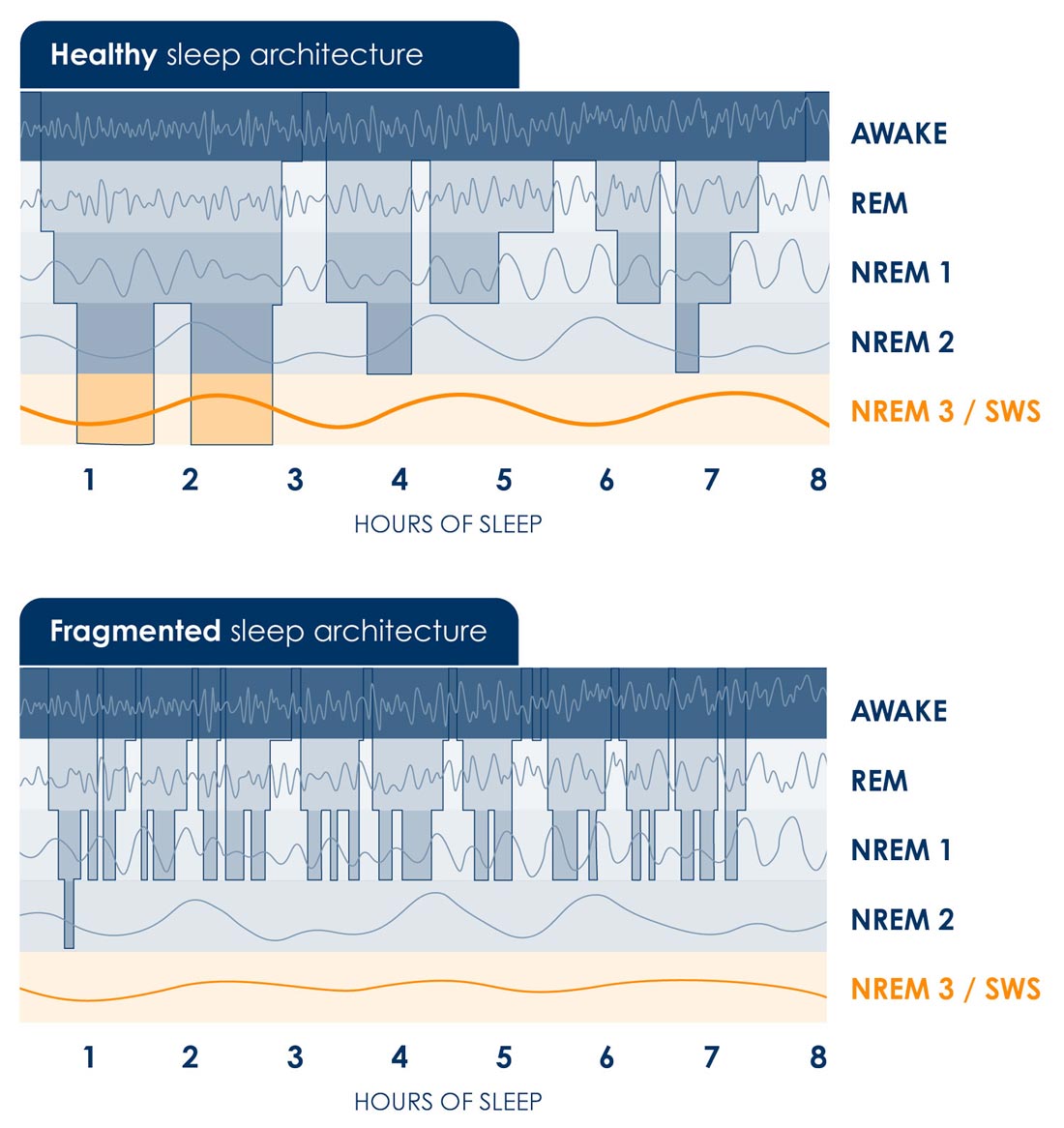
Sleep architecture is druggable, measurable, and translatable.
The core electrophysiological signatures of sleep are conserved across species and recorded the same way by EEG so an effect produced in a preclinical model can be confirmed directly in humans.
This provides an early, objective pharmacodynamic readout before any cognitive endpoint is measured. Combined with fluid biomarkers, this de-risks development and shortens the path to proof of concept.

