| Discovery | Preclinical | IND Enabling | IND/CTA |
|---|
Program 1: ATX1225
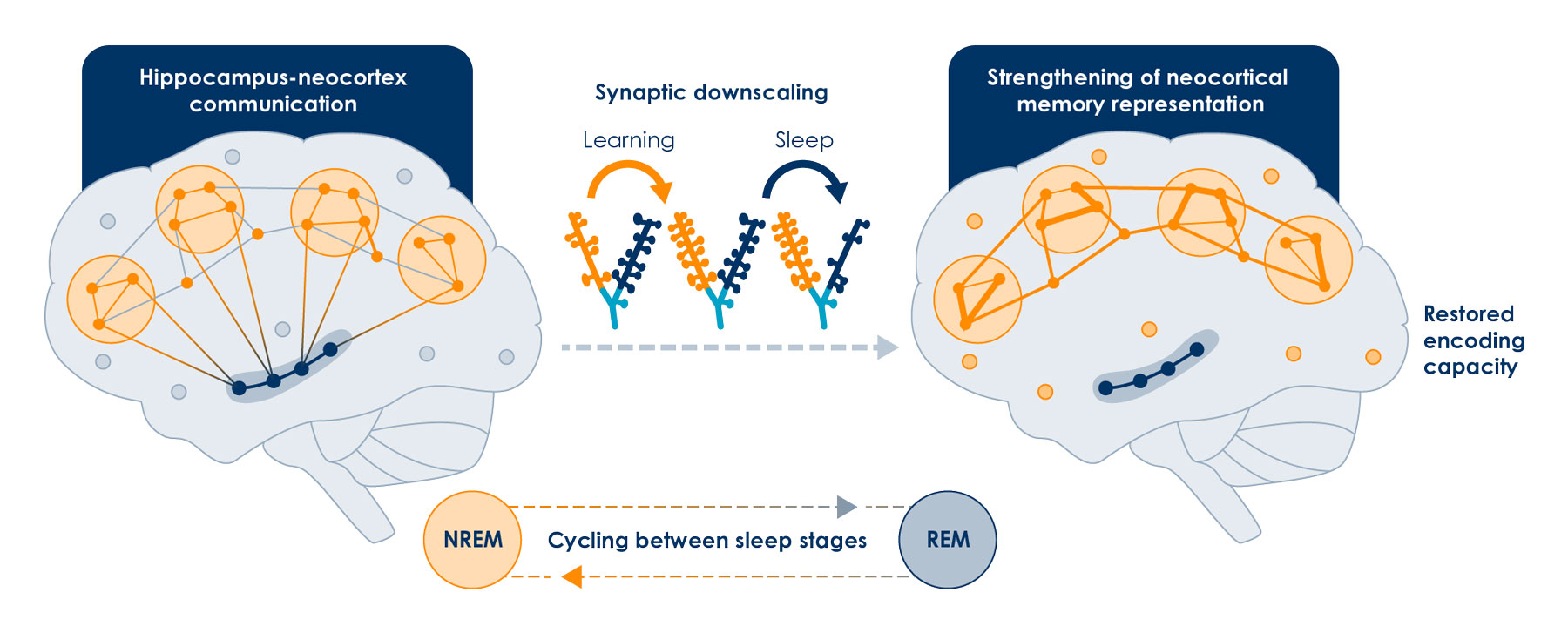
Mechanism: Restoring continuity of deep sleep
Lead Indication: Mild Cognitive Impairment / Early Alzheimer’s Disease
Learn more about ATX1225 program
ATX1225
Focused on improving cognitive function by restoring the continuity of deep sleep. In development for mild cognitive impairment and early Alzheimer’s disease. |
ATX1225 is designed to restore deep SWS by suppressing the overactive arousal signaling that fragments it, rather than sedating the brain into sleep. It combines two complementary mechanisms which, acting together, serve as the ‘master switch’ for sleep continuity and produce longer and less interrupted periods of SWS.
In preclinical studies, we demonstrated that ATX1225 enhanced sleep quality and continuity and improved markers of synaptic function and memory formation. |
Program 2: ATX0926
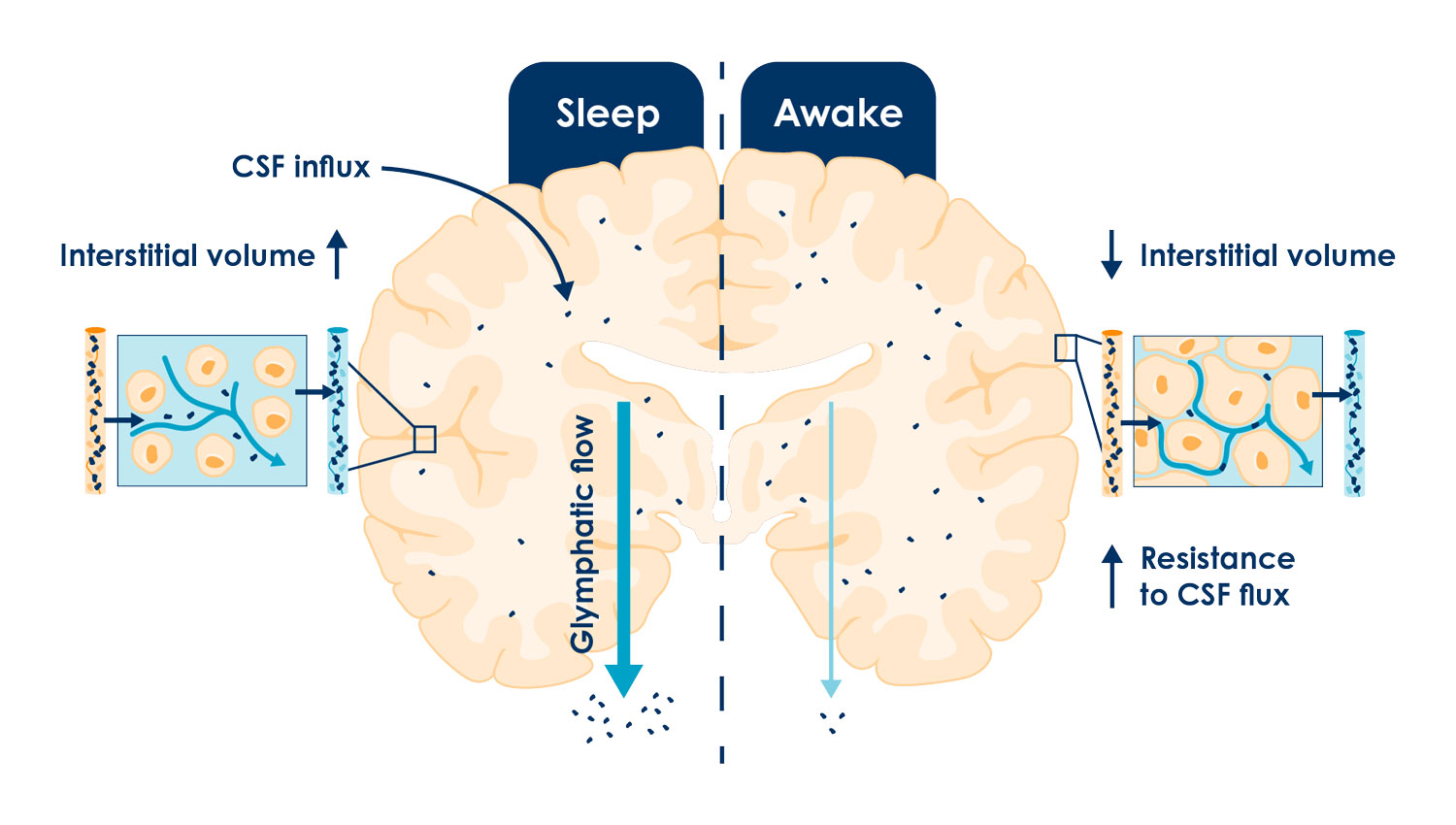
Mechanism: Enhance glymphatic flow
Lead Indication: REM behavioral disorder/prodromal Parkinson’s disease
Learn more about ATX0926 program
ATX0926
Focused on enhancing slow-wave activity to support brain clearance. In development for neurodegenerative proteinopathies.During SWS, interstitial space expands and cerebrospinal fluid influx along perivascular routes rises. The amplitude of slow-wave activity (SWA), the delta-frequency power highest in this stage, is associated with the brain’s fluid-based clearance of metabolic and protein waste. |
ATX0926 is designed to enhance SWA with the aim of supporting clearance of neurotoxic aggregates, a potentially disease-modifying approach.
In preclinical neurodegeneration models, we demonstrated that a tool compound acting through the same mechanism as ATX0926 enhanced the SWA, boosted glymphatic flow and reduced neurotoxic proteins. |